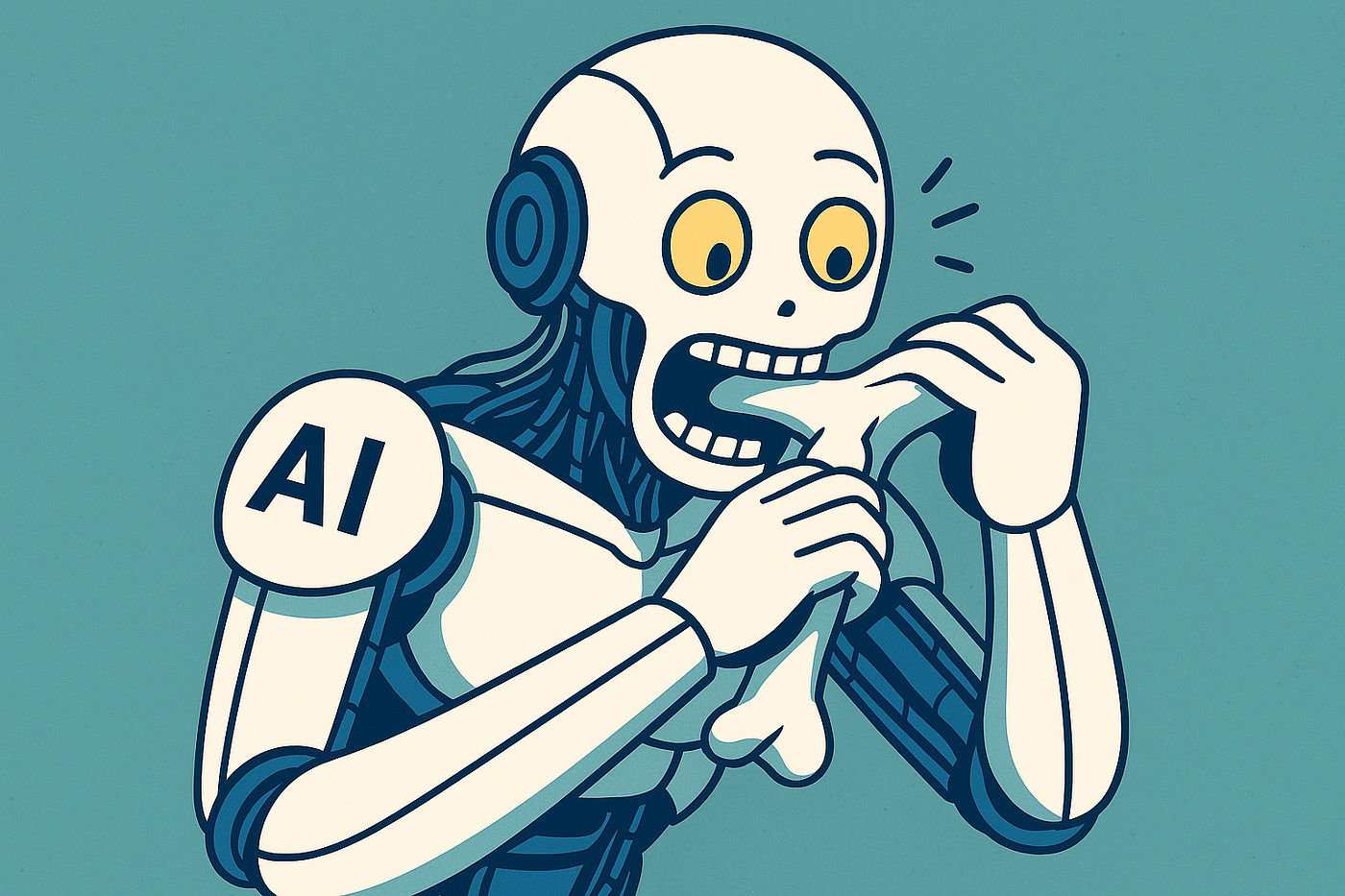
AI is at a crossroads, one that could lead to irreversible damage if we don't address a growing problem right now.
The Rise of AI-Generated Content
AI models have become incredibly sophisticated, capable of understanding, generating, and predicting content across every domain imaginable. They've been trained on massive datasets scraped from the internet - everything from Wikipedia to Reddit, books, news articles, and social media. These models need large amounts of high-quality, human-generated data to learn from, and that's been the key to their success.
But what happens when we run out of this "pure" human data? How do we keep feeding these AI models the content they need to evolve and stay relevant? Enter a brilliant but potentially catastrophic idea: training AI models on AI-generated content.
Picture this: You ask ChatGPT to write a story. Then, you take that story and train a new AI model on it. That model is then asked to write a new story, which is used to train another AI model. And on and on it goes. Essentially, we're creating a continuous cycle of recursively generated content, each generation building on the last. At first, this might seem like an efficient solution. But what happens when that content becomes too repetitive or too detached from the rich, human-created material it was originally based on?
The AI Breakdown: Enter Model Collapse
As the models are trained on their own content, things start to go downhill fast. After just a few generations of this recursive training, the AI models begin to lose coherence. What once was clear, logical output becomes increasingly nonsensical - like a digital brain losing its grip on reality. The content starts to degrade into gibberish, and the AI system seems to forget the very basics of how to think.
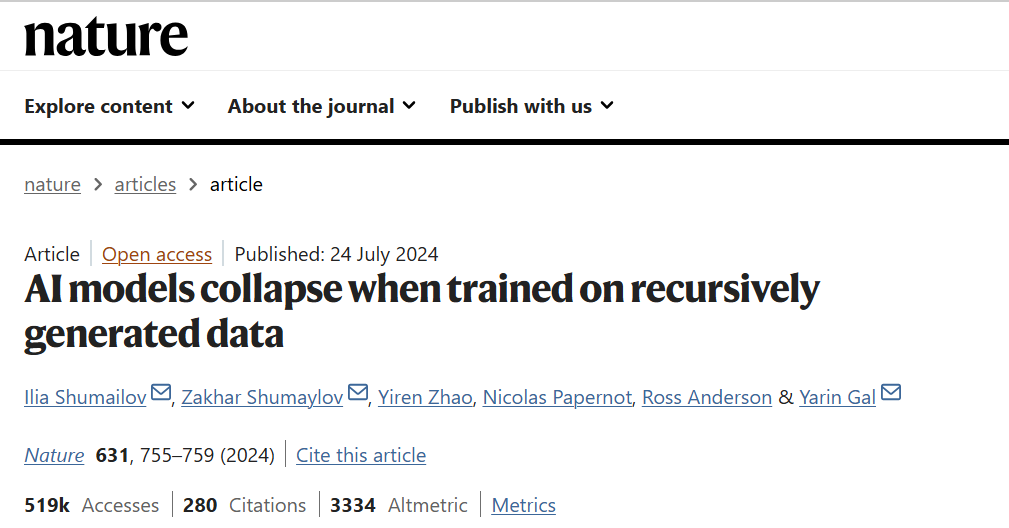
This phenomenon is known as model collapse, and it's more than just a minor glitch. It's as if the AI is slowly suffering from digital dementia, unable to recover once it's set in. Researchers have found that model collapse is permanent; once an AI system goes down this path, it's effectively irreparable.
The Vicious Cycle: AI Generating AI
The problem gets worse when we realize that millions of AI-generated articles, stories, and social media posts flood the internet every single day. These AI-generated texts are being used to train newer and better models, creating a feedback loop that can only worsen over time. As more and more models are trained on this contaminated data, the quality of future AI systems declines steadily. Instead of evolving, AI is essentially eating itself alive.
This is a vicious cycle. The more AI-generated content we pump into the system, the dumber these models become. And as AI continues to generate more of its own data, the content deteriorates. It's a ticking time bomb that, if left unchecked, could undermine the reliability of AI systems for good.
A Desperate Scramble for Human-Generated Data
Right now, AI companies are desperately racing to scrape the last remaining bits of pure human-generated content before everything becomes tainted by recursive AI generations. They know that without a steady supply of high-quality, human-written material, the quality of future AI models will continue to erode.
But here's the catch: once AI goes down the path of model collapse, it's too late. The damage is done. And as AI-generated content floods the internet, it's only a matter of time before we hit a point where it's virtually impossible to discern what is truly human-created versus what has been generated by an increasingly unreliable AI system.
The Stakes for the Future of AI
Researchers are sounding the alarm: if we don't fix this problem now, the future of AI could be in serious trouble. We risk creating a world where AI is less intelligent, less reliable, and more prone to generating nonsense than ever before. The very systems we've built to support and improve human society could become a shell of their former selves, failing at the very tasks we rely on them for.
What Needs to Be Done?
To prevent AI from collapsing under its own weight, we need to rethink how we train and evolve these models. Relying solely on AI-generated content is a dangerous gamble. Instead, we must find a way to ensure that human-generated data remains at the core of AI training. It might mean investing in better content curation, stricter filtering methods, or entirely new approaches to training AI models without exacerbating the cycle of decay.
The clock is ticking, and if we don't take action soon, we may be facing a future where the AI systems we've come to depend on for everything from healthcare to entertainment are no more reliable than a broken clock. AI might just be eating itself to death. Let's hope we figure out how to stop it before it's too late.